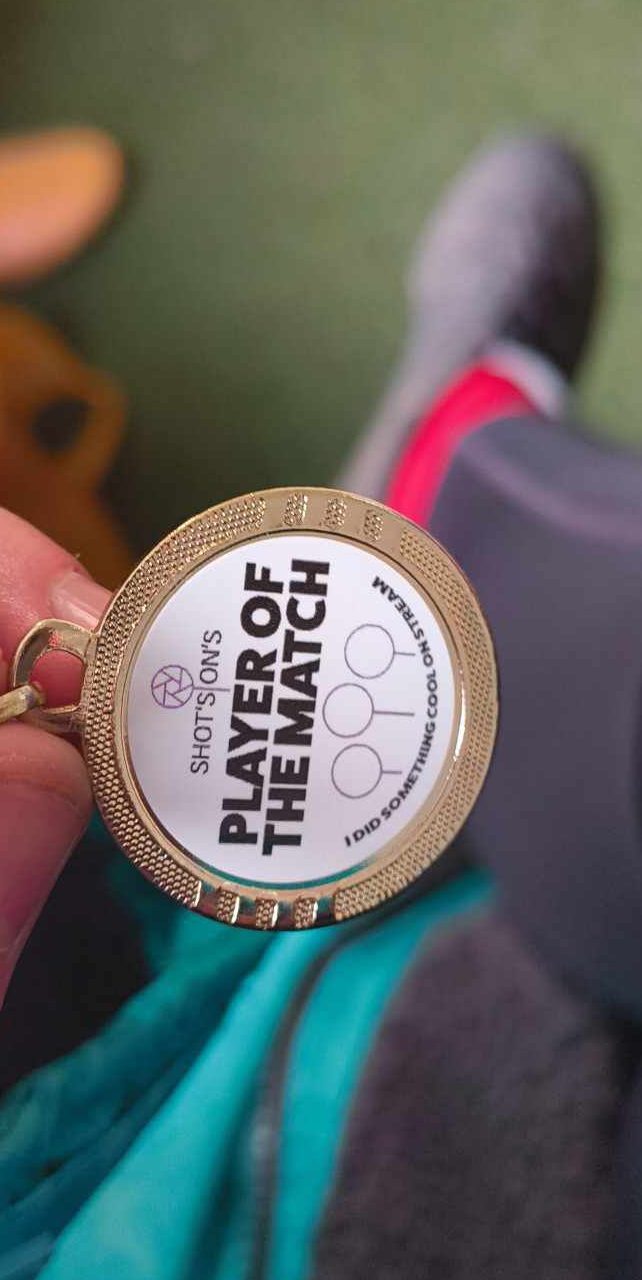
If you had told me years ago that I’d be playing a full-contact sport and earning Player of the Match, I’m not sure I would have believed you. But that’s exactly what happened at my latest quadball tournament! Quadball is a fast-paced, mixed-gender, and highly strategic sport, and for me, it’s more than just a game—it’s a space where I can challenge perceptions about disabled athletes and just be me.
The Tournament Experience
Walking onto the pitch, I felt the usual mix of nerves and excitement. The energy was high, the competition fierce, and I was ready to give it my all. Throughout the day, my team fought hard, adapting to different opponents and pushing ourselves to perform at our best.
As someone with fibromyalgia and autism, playing quadball comes with its own challenges. The physical demands of the sport can be intense, and managing pain and fatigue is always part of my game plan. But through experience, I’ve learned how to pace myself, listen to my body, and lean on my teammates when needed. They are extremely accommodating.
Winning Player of the Match
Earning Player of the Match was a huge moment for me. Not just because it recognised my performance on the pitch, but because it proved—again—that disabled athletes belong in competitive sports. I’ve had people assume I wouldn’t be able to keep up, that I’d be a liability, or that I shouldn’t be playing at all. This award was a reminder that disability doesn’t define ability.
What helped me stand out? A combination of strategy, adaptability, and teamwork. I focused on positioning, making smart plays, and supporting my teammates however I could. Quadball isn’t just about speed or strength—it’s about playing smart, something that disabled athletes often excel at.
The Bigger Picture: Accessibility in Quadball
Quadball prides itself on being an inclusive sport, and in many ways, it is. The gender-inclusive nature of the game challenges traditional sports norms, and there’s a strong sense of community. But when it comes to disability, there’s still work to do. More conversations about accessibility, adaptations, and representation are needed.
From ensuring tournaments accommodate different access needs to challenging the perception that disabled players are a “weak link,” there’s so much potential to make quadball truly inclusive. My experience in this tournament reinforced why I advocate for disabled athletes—not just in archaeology, but in every aspect of life.
Final Thoughts
This tournament reminded me why I love quadball: the strategy, the teamwork, and the opportunity to prove that disabled athletes belong in competitive spaces. I hope my experience encourages others—whether you’re disabled and considering playing, or an ally looking to make sports more inclusive.
Let’s keep pushing for accessibility, breaking down barriers, and proving that disability doesn’t mean inability. If you’re a disabled athlete or interested in adaptive sports, I’d love to hear your experiences! Let’s keep the conversation going.
 Knots and Trowels
Leave a comment